The Bay’s Secret Sauce, Vallejo
The “itty bitty city” is a component ingredient in a successful bay area music scene.

Secret Ingredient.
Vallejo, California is a grape’s toss from Napa, a ferry ride from San Francisco, a whisper from Oakland and a main artery to the state’s capital in Sacramento. A diverse (even by bay area standards) multigenerational city, Vallejo maintains the texture of an iron-starched blue collar small town with remnants of a southern heritage, stemming from Great Migration activity to the city’s Mare Island Naval Shipyard. Despite its proximity to its more culturally attractive neighbors, Vallejo never mimicked, instead reveling in a rich musical legacy that, per capita, arguably rivals any major city in the country.
Vallejo’s artistry is notable in at least two ways. First, its musicians helped shape multiple genres across various decades, spanning from the eras of soul and rhythm and blues to funk to rap, further developing the latter in niche underground subgenres in Mobb and Hyphy music (yes, Oakland, coined the latter term). Additionally, the city’s artists are notorious for their persistent independence, examining what it means to be independent, ultimately rewriting expectations of indie music success. Together, these contributions reveal Vallejo as a component ingredient in the bay area music scene.
Prototype.
Undoubtedly, Vallejo’s contribution to music begins with Sylvester “Sly Stone” Stewart (technically, Johnny Otis is a Vallejo native, but he grew up in nearby Berkeley). Though he would broadcast his genius as a disc jockey in San Francisco, Sly grew up nurturing his sound before local Vallejo talent shows and the black church. As a fountainhead of black music, Sly’s originality reverberated throughout the globe, leaving an indelible influence on generational talents such as Prince, Rick James, and D’Angelo.
In the Fun Key
Long before the unabated stench of a nuisance emanated from Vallejo’s treatment plant, Con Funk Shun put its foot in the funk. A band comprised of several high school students from Vallejo High School, the band would get some training in Memphis, Tennessee before returning to Vallejo to churn out hit after hit after hit. Con Funk Shun remained a fixture on the funk and R&B scene before splitting up, with the band members realizing varying degrees of solo success. Notably, Felton Pilate became the stealthy sonic tailor of MC Hammer’s commercially successful run of albums, including a diamond record in Please Hammer Don’t Hurt ‘Em. Pilate would later lend his ear and mentorship in producing one of Vallejo’s early hip hop records with up-and-coming local producer Khayree, incidentally, influencing a future Vallejo star in Mac Dre.

the Ism. The Game.
A hallmark of Vallejo rap is a compound butter of slick wordplay and a confident flow, loosely inspired by pimps such as John Dickson (Rosebudd). Ergo, the respective mouthpiece of rappers, E-40 and Mac Dre, have earned their respect among peers for originality that has etched their faces in the bay area’s Mt. Rushmore of hip hop. Still, one of the more astounding features of E-40 and Mac Dre is that neither sounded like the other despite being from the city and overlapping for much of their careers.
Earl.
Sui generis. Banal superlative? Yup. Inaccurate? Nope. That’s because E-40 is one of hip hop’s more recognizable voices, the seasoned, five decade pioneering rapper boasts a broad vocabulary and slang that has contributed volumes to the bay’s rap lexicon. His business acumen is second to none, on brand, becoming one of the initial rap artists to venture into liquor, apprising himself of the region’s knowledge. He’d sign various local talents such as Celly Cel, Turf Talk, B Legit, Nef the Pharoah, and Droop-E to his Sick Wit It imprint. Master P has not shied about attributing his success to E-40, specifically his uncle Saint Charles Thurman, the man who had the keen foresight to understand the distribution side of the business.
A Mac Named Dre.
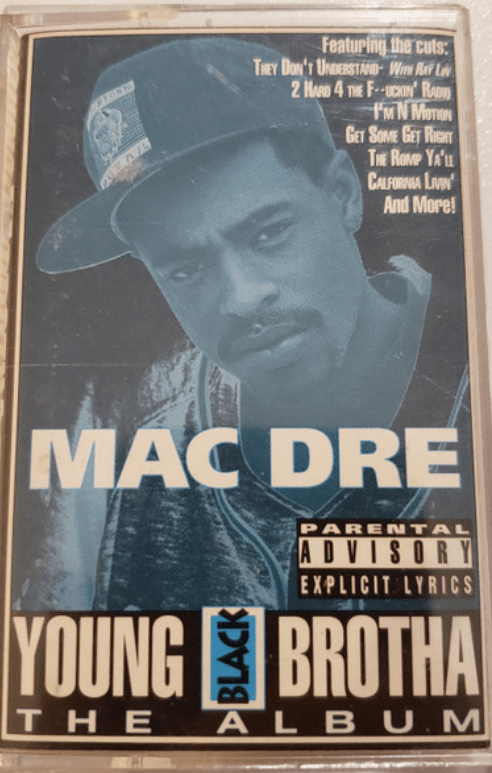
Lamentably, many artists popularity balloon after their passing, but it’s fallacious to attribute Mac Dre’s fame solely to posthumous celebrity. Mac Dre’s success can be viewed in two acts. The Young Black Brotha, Khayree Era or the Thizz Era. For the sensationalist reader (read pre-incarceration; post-incarceration). When Mac Dre first hit the scene, he was under the tutelage of Khayree kicking off with “Too Hard for the Radio”. But for his incarceration, Mac Dre would have likely had the “All About My Fetti” track which became Santa Rosa’s Ray Luv’s standout hit from east coast film, New Jersey Drive.
Post-prison, Hicks hit the ground running, formulating a marketing mix that began to crystallize before his passing, on the verge of a blog era that would surely catapult his success to a larger audience. His inimitable charisma would position him as the face of the hyphy movement – putting together his own promo pieces such as Treal TV, full of humorous raw edge content falling somewhere between BET Uncut and Adult Swim Programming. Courtesy of San Francisco’s Andre Nickatina, he’d find a loyal fanbase in the pacific northwest, touting his ecstatic Thizz label featuring artists such as Oakland artist, Mista Fab (Son of a Pimp).
Game Related
E-40 Talks Numbers with Leslie “Big Lez” Sugar.
Mac Dre talks Toolkit.
Rapper Turned Hacker
LaRussell runs his affairs like a Silicon Valley start-up. A relentless work rate and commitment to documenting his process, few artists or labels for that fact, have been as transparent about the numbers. Thus, LaRussell finds himself as a music industry disruptor, adopting more socially radical business ideas, such “pay what you want”, thereby transforming fan engagement in allowing them to participate in creating value (he’s also implemented the model at a local eatery. An exemplar of his resourceful business sense, LaRussell transformed his backyard into a performance space, operationally scaling his Good Compenny platform to a degree that may tempt folks on Sand Hill Road to come knocking. A bay area product, he’s hacked the algorithm, causing artists to rethink an independent blueprint in today’s digital metric obsessed era.
Prodigy
Gabriella “Gabi” Wilson (H.E.R.) or little Gabi Wilson as she was known to locals who bared witness to the precocious child’s powerful voice was revered long before she graced the historic Apollo with a performance that could make Howard Sims tap dance. In the follow years, rumors abound that little Gabi signed a deal, yet there was no music. Then, came the rebrand as H.E.R., a mystifying soulful voice from the then teenager (2017 Grammy for Best R&B Album, for those that care) that saw Wilson capture mass appeal going on to win a few grammies—including 2017’s eponymous album and an academy award for her music contributions. Since the debut of H.E.R., Wilson has been a steady, multifaceted contributor to a new generation of soul and R&B.
Child prodigy, Gabi Wilson, later known as H.E.R. stuns the Maury crowd.
B Sides
Southside Hustle:
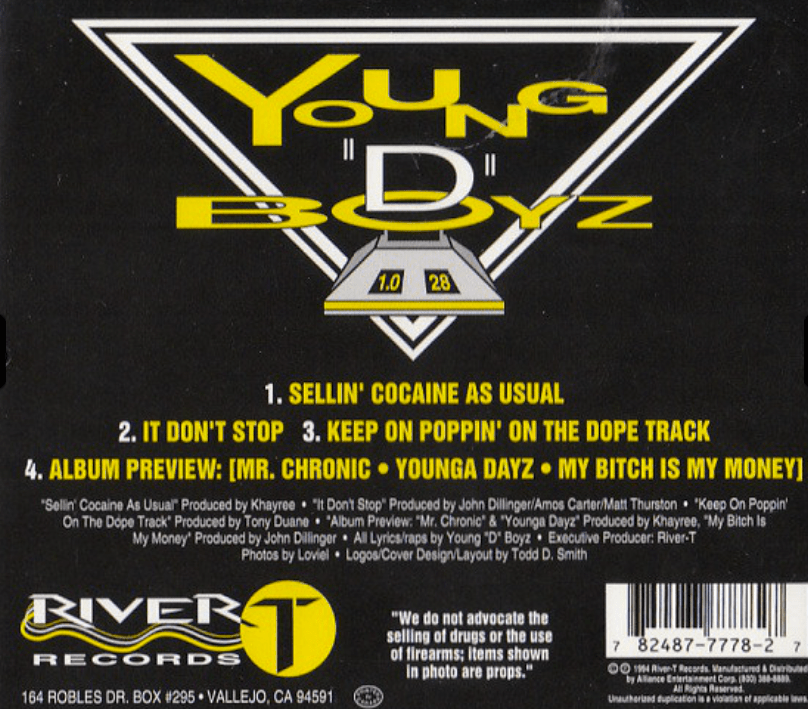
“Sellin’ Cocaine As Usual”, listening to The Young “D” Boyz debut album is intoxicating and special. It feels like a cruise down sun drenched 80 (California’s interstate highway), lost in the haze of a high school bravado. Rappers, Doff Kapone, Bebop, and Matty Wacka, wax street details in an era of no pretend, sexual conquests, and still find space to profess love for black folk atop Khayree’s production. The result? A seminal early entry into Mobb Music.
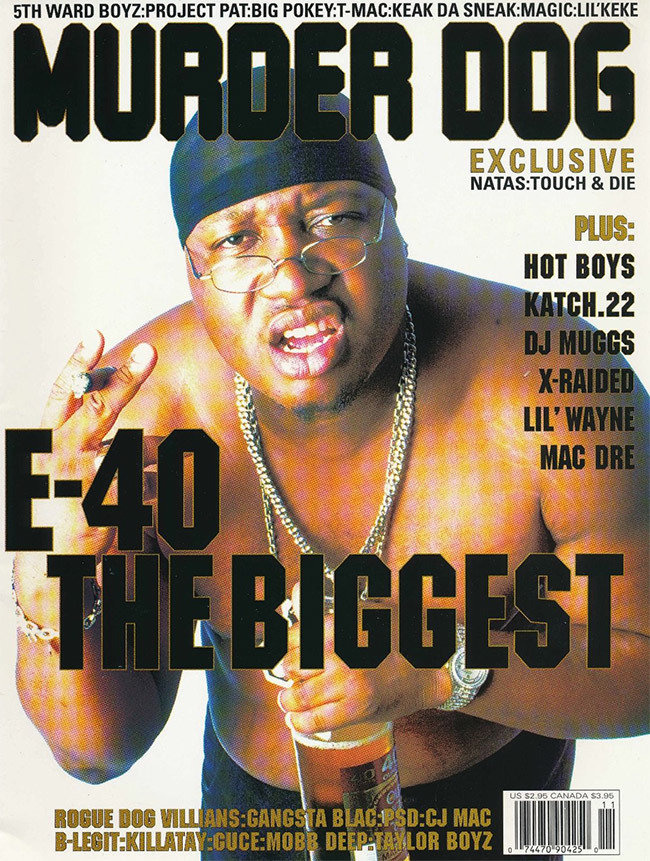
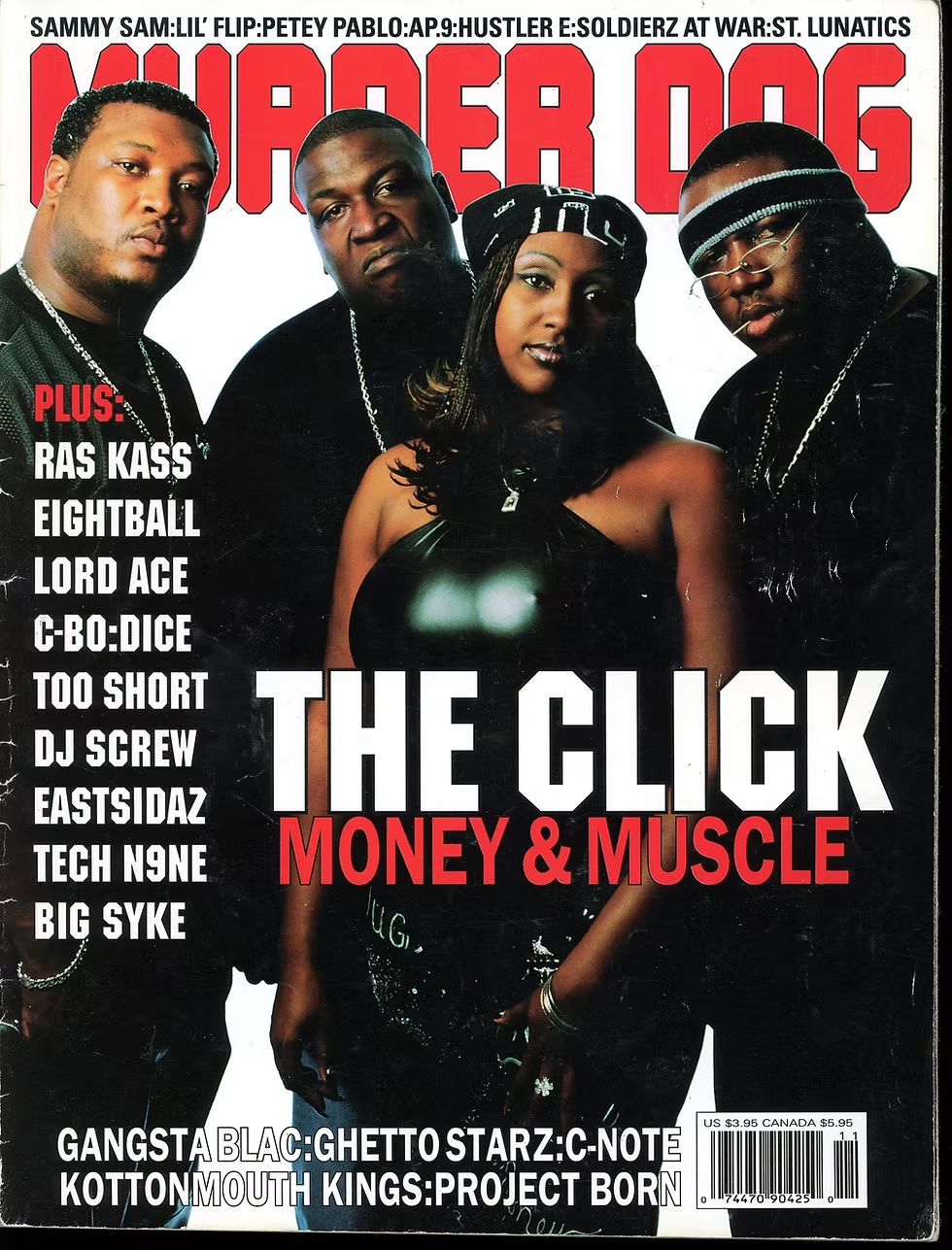
Murder Dog Magazine represented the antithesis of mainstream hip hop & rap magazines, the raw publication gave credence to the bay area and southern underground rap scene. A longtime southside Vallejo resident, founder of the magazine, Black Dog Bone, specifically amplified Vallejo’s voices.
Celly Cel’s “It’s Goin’ Down” epitomizes Mobb Music and becomes thee bay’s anthem.
Nef the Pharaoh’s Big Tymin’ would further solidify Vallejo’s reverence for its country cousins in the south, specifically New Orleans bounce), Nef would shoulder the city’s sound during the transition of hyphy into younger hands such as Lil B and ultimately, Vallejo peers, SOB x RBE. Unfortunately, Nef wouldn’t drop his album until 3 years after Big Tymin blew up.

The North Remembers:
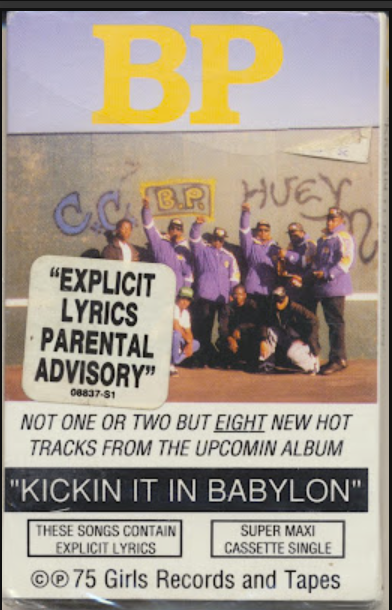
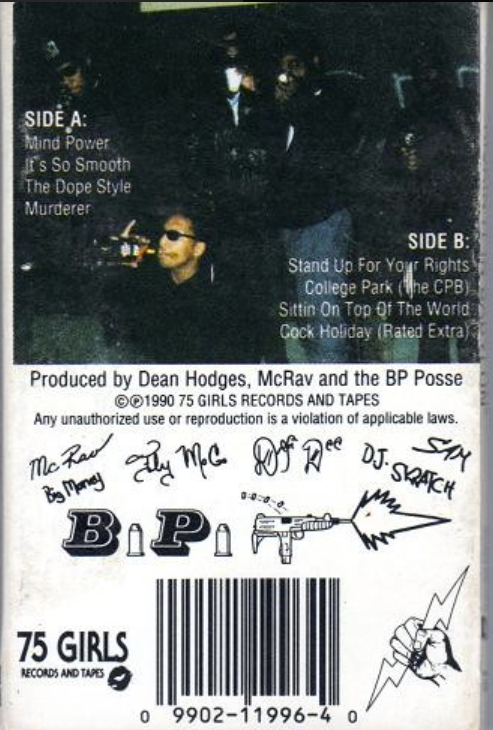
North Vallejo’s (College Park) “B.P.”, becomes the first rap act outside of Oakland, to be signed to Dean Hodges’ 75 Girls Records (Too $hort’s first record label).
Before tragedy unraveled on Unsolved Mysteries, Young Lay was in line to become a standout rapper from Vallejo. Signed to Khayree’s Young Black Brothas Records, the Lofas neighborhood rapper would release one of the more underrated yet sonically pleasing LPs from the era, in “Black ‘n Dangerous”.
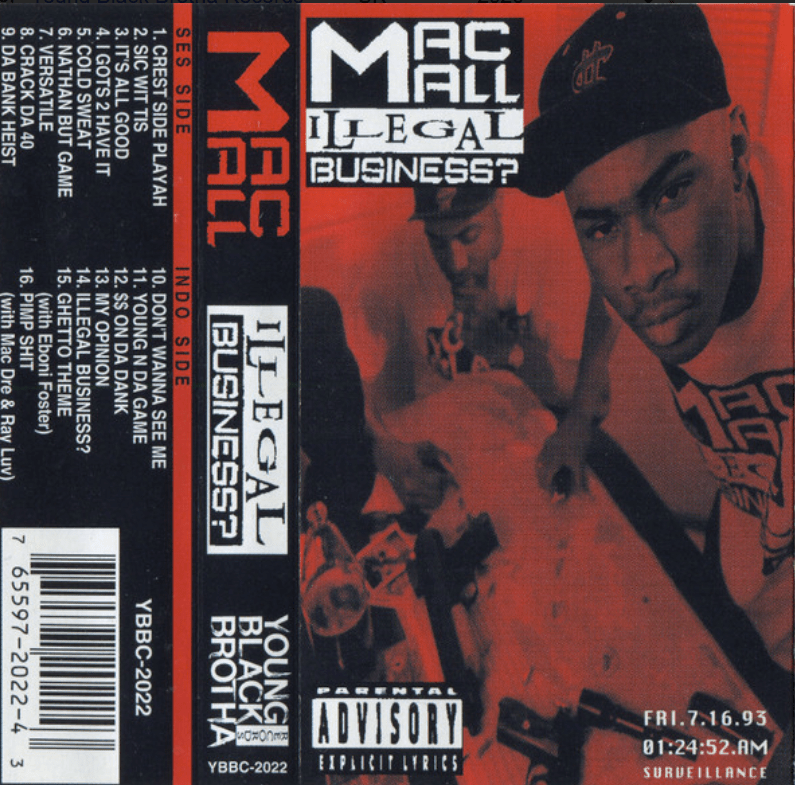
Mac Mall’s explosive debut LP, Illegal Business carried the northside banner, while Mac Dre is away, cementing himself as a serious emcee allowing him to get a major record deal.
Deep Cuts
Khayree Shaheed:
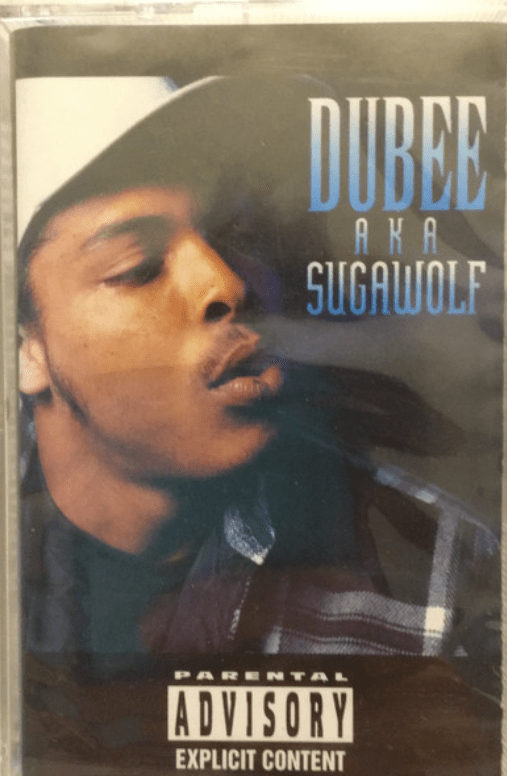
The dexterous music producer and founder of Young Black Brotha Records. Khayree was revered for his minimal sampling, preferring to play live instruments in recordings. He’d go on to orchestrate the early 90’s bay area rap scene, producing records for the Young “D” Boyz, Mac Mall, Young Lay, Dubee, Mac Dre, and Ray Luv, among other bay area stand outs.

- “N2Deep” (Back to the Hotel) becomes first Vallejo act to sign major label deal.
- SOB x RBE: The group’s meteoric rise would fan out due to group drama, the group’s most successful anthem, “Anti” anchored with a catchy hook remains a bay staple. Though some of the members of SOB are enjoying a modicum of success, DaBoii appears to be the brightest star.
- Long time Vallejo hip hop group, Funky Aztecs collaborate with 2Pac on song, “Slippin into Darkness”, a feat in Black Brown relations.
- Before he relocated to Houston, Texas and became Baby Bash, Hogan High School’s Ronald “Ronnie” Bryant abandoned pro hoop dreams, opting to form part of Vallejo rap group, Potna Deuce.
- San Francisco’s Larry June had a brush with Vallejo, attending Jesse Bethel High School, during the middle of the hyphy era, surely picking up some seasoning along the way.
Larry June talks tools.
 W$W Library